Key Operating Takeaways
- Scampi (Macrobrachium rosenbergii) thrives in pure freshwater ponds, yielding large jumbo prawns (50g to 100g+).
- Install artificial substrates (nylon netting, PVC pipes, coconut fronds) to expand surface area and prevent territorial aggression.
- Practice selective 'cull harvesting' starting from Month 5 to harvest fast-growing Blue-Claw (BC) males.
- Polyculture with surface-feeding Catla and Rohu increases total pond profitability without competing for bottom feed.
1. Scampi Biology, Male Morphotypes & Growth
Macrobrachium rosenbergii males exhibit three distinct morphotypes: Small Males (SM), Orange-Claw (OC), and dominant Blue-Claw (BC). Dominant Blue-Claw males suppress the growth of smaller males through territorial behavior.
2. Pond Design & Artificial Substrates Installation
Because scampi are bottom-dwellers, installing submerged plastic mesh netting, PVC pipe sections, or palm leaves increases usable surface area by 30-40% and reduces cannibalism during molting.
3. Sinking Pellets & Checktray Feeding
Feed 30% to 34% crude protein sinking pellets twice daily. Scampi feed actively at dusk and dawn.
4. Selective Cull Harvesting Techniques
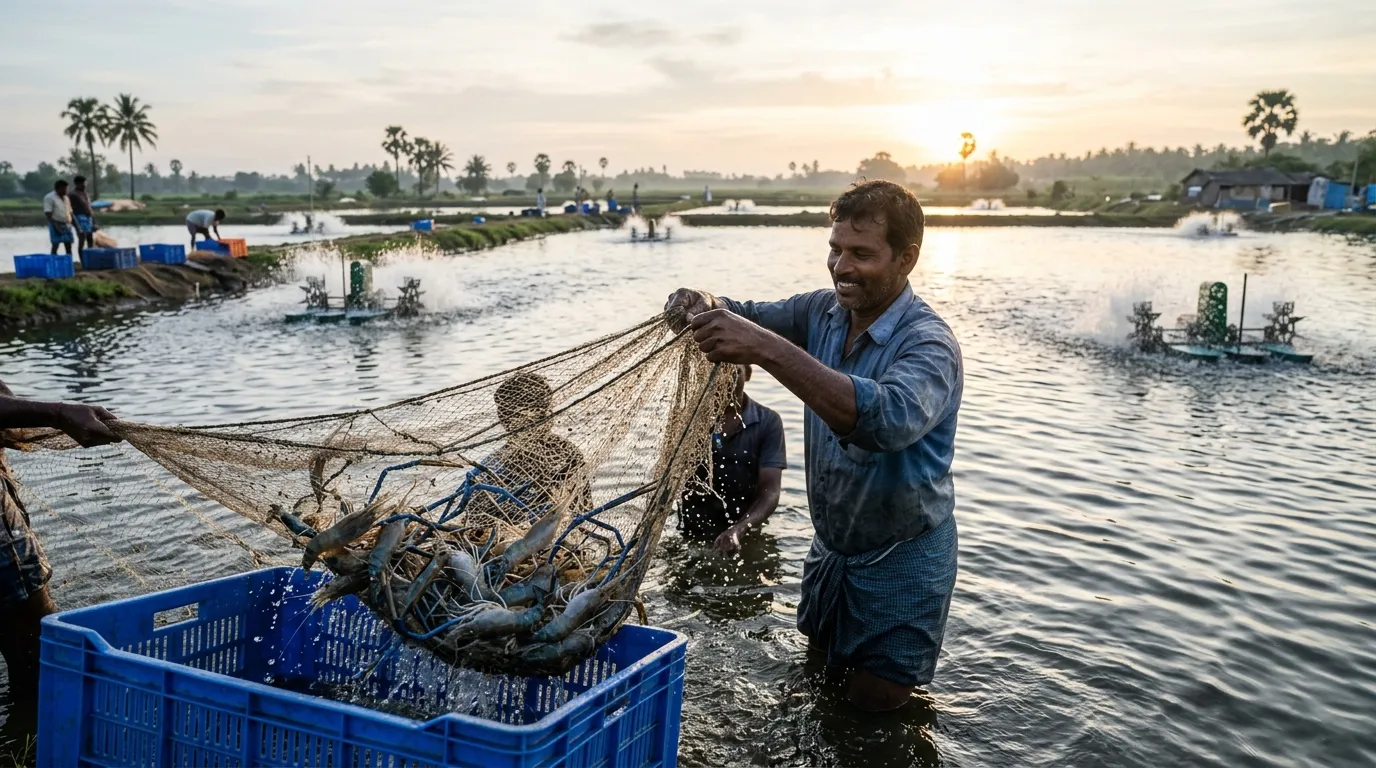
Starting at Month 5, use large-mesh seine nets (2-inch mesh) to harvest dominant Blue-Claw males (> 60g). Removing dominant males allows subordinate Orange-Claw males to rapidly transform into Blue-Claws and accelerate growth.
Technical Frequently Asked Questions
Can Scampi be cultured together with Indian Major Carps?
Yes, Scampi polyculture with Catla and Rohu is highly profitable. Carps graze in upper and middle water layers, while Scampi graze on benthic detritus.